
Hello, my lovely.
One of the most unnerving things about entering the world of witchcraft is realising that a whole new language exists! Suddenly, everyone is talking athames, sabbats, types of spells and planetary correspondences, which can be absolutely blindsiding for newer witches.
When I first began practising witchcraft at 12 years old, I spent hours scribbling definitions into notebooks and trying to untangle the differences between Paganism, Wicca and witchcraft itself. Even now, after 24 years of practice, I still love learning the origins of our magickal terms (for instance, did you know there is a link between the words grammar and grimoire? This will always be fascinating to me) and exploring new areas of witchcraft.
We are always learning, and there is no need to add the extra smoke and mirrors of complex terminology to an already mystical path.
So, I have put together this A-Z of Witchcraft: a glossary of the most common terms, tools and phrases you’re likely to come across in a modern witchcraft practice. If you’re a beginner or looking for a witchcraft refresh, here is my advice as a long-time witch. Grab a pen and notebook (yes, that fancy one you’ve been saving for a special occasion) and start your Book of Shadows – see below – with these useful key witchcraft terms.
They are the jumping-off point for all your future circles, spells, rituals and inner work.
If you enjoy posts like this, you can also upgrade your subscription to The Green Witch for deeper seasonal rituals, folklore deep-dives, spellwork, and Wheel of the Year guides to help you build a witchcraft practice that feels rooted in nature.
And now, let’s get stuck in!
The A-Z of witchcraft
-
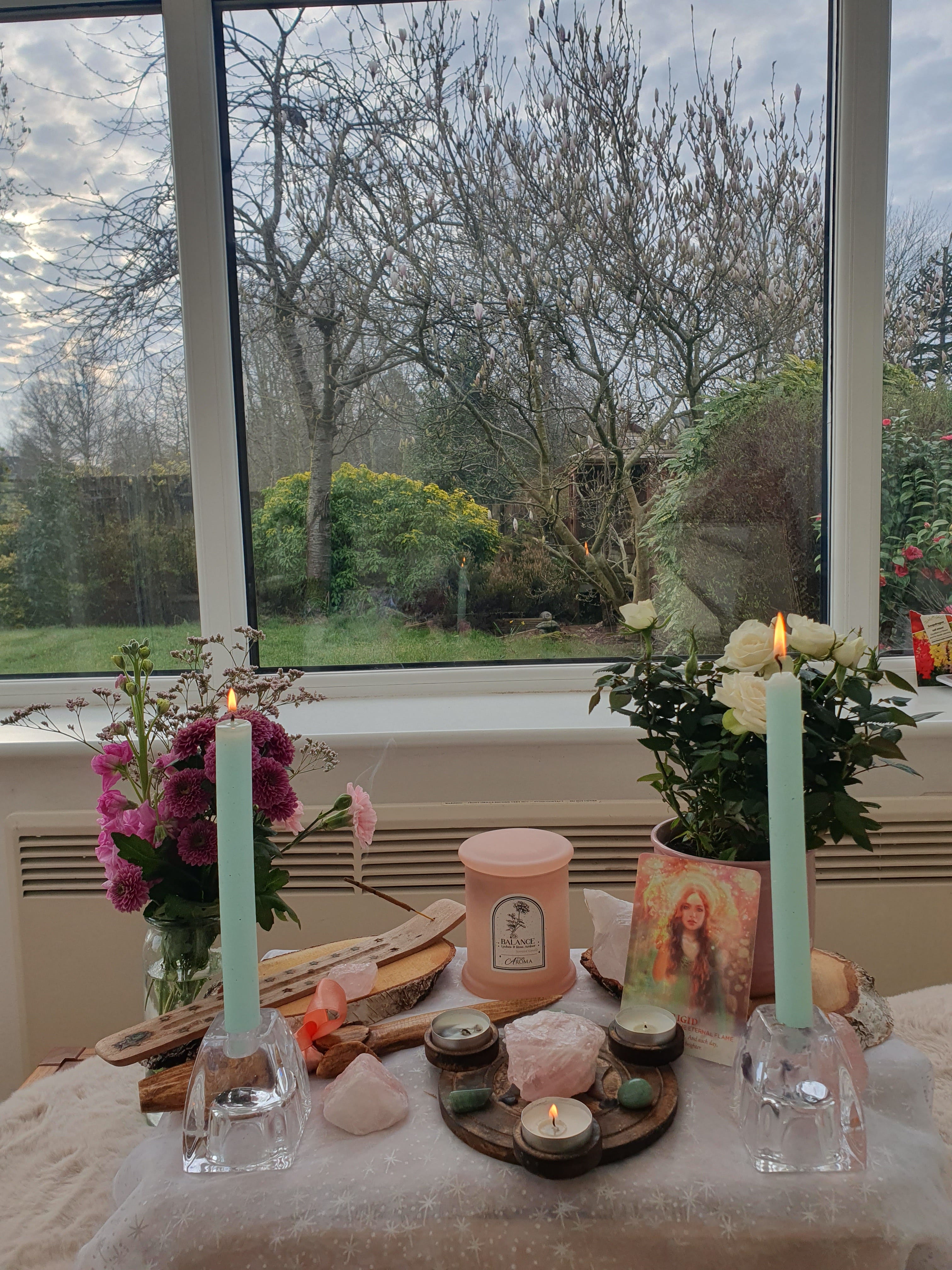
altar – a dedicated sacred space used for spellwork, rituals, offerings and devotional practice
-
anointing – the process of ceremonially dressing a candle with oil
-
amulet – a small item or piece of jewellery that repels negative energies from the wearer
-
athame – (pronounced ‘ath-UH-may’) a ceremonial dagger used in rituals or on a witch’s altar as a symbol of masculinity (my own is made of wood – less “cutty cutty” and more “point-at-things-with-intent”)
-
besom – a witch’s broom associated with cleansing, protection and ritual purification through the act of sweeping
-
boline – traditionally, a white-handled knife used to cut herbs, and held on a witch’s altar
-
Book of Shadows – a diary or journal used to record personal spells, rituals, potions and other magickal workings

-
cardinal sign – the zodiac sign that starts a season, namely Aries (spring), Cancer (summer), Libra (autumn) and Capricorn (winter)
-
Celtic Ogham – an early Irish alphabet system named after the Celtic god of eloquence and literacy
-
chalice – a ceremonial cup used to represent the feminine divine on a witch’s altar
-
charm – focusing a magick spell into a specific object, which is then carried about the person or hung about the house (amulets and talismans are forms of charms)
-
circle – a sacred, circular space (sometimes containing your altar) in which to contain and work with magick. Here’s how to cast one >
-
correspondences – spiritual associations connected to colours, herbs, planets, crystals, days of the week and other magickal symbols
-
divination – the practice of seeking spiritual guidance, insight or messages through magickal systems such as Tarot, runes or scrying
-
douter – a candle snuffer, usually made of metal
-
esbat – a ritual or gathering traditionally held during a full moon. This word is often used interchangeably with the day of the full moon itself. Read my post, “Your Full Moon Recovery Kit” >

-
green witch – a witch with close links to nature magick, herbs and plants
-
hedge witch – a solitary witch often associated with folk magick, spirit work, trance states and herbal knowledge. I like to think of them as “riding the hedge” between the physical world and the spirit world
-
intention – the focused emotional and energetic purpose placed behind a spell or ritual
-
magic/magick – a spiritual force that can be used to enhance, influence or change the way something happens. This is often spelt with a ‘k’ in the witchcraft community to differentiate it from “rabbit out of a hat” magic
-
Pagan/Paganism – someone who celebrates the beauty of nature, observes the seasons’ cycles and sees nature as innately spiritual (not the same as a witch, see below)
-
pentacle – a five-pointed star
-
pentagram – an encircled five-pointed star ritual – a ceremonial focusing of magickal energies to reach an intended outcome
-
ritual – a ceremony where we honour and observe a particular festival, season, deity or element
-
rune – a letter from a Germanic alphabet system that is often used as magickal symbols or divination tools
-
sabbat – one of the eight Pagan festivals celebrated across the Wheel of the Year (see below)
-
scrying – divining the future, usually by consulting objects such as a crystal ball, a black mirror (traditionally a reflective dark surface like obsidian), a candle flame or a bowl of water
-
sigil – a symbol or sign imbued with magickal intent. Usually, a sigil is more powerful when created by you. Learn how to create your own sigil here >
-
spell – a focusing of magickal energies to produce the intended outcome
-
talisman – a small item or piece of jewellery spelled to attract power and other qualities to the wearer. Find out how to make one here >
-
Wheel of the Year – a circular depiction of the eight Pagan festivals – Samhain, Yule, Imbolc, Ostara, Beltane, Litha, Lammas/Lughnasadh and Mabon – showing how everything is cyclical. I’ll be sharing my Litha newsletter in two weeks, just ahead of the summer solstice!
-
Wicca – a denomination of witchcraft that believes in the Threefold Law, uses only positive magick and often performs elaborate ceremonies and rituals as part of its practice
-
witch – someone who uses magick and charges objects with energy to bring about change
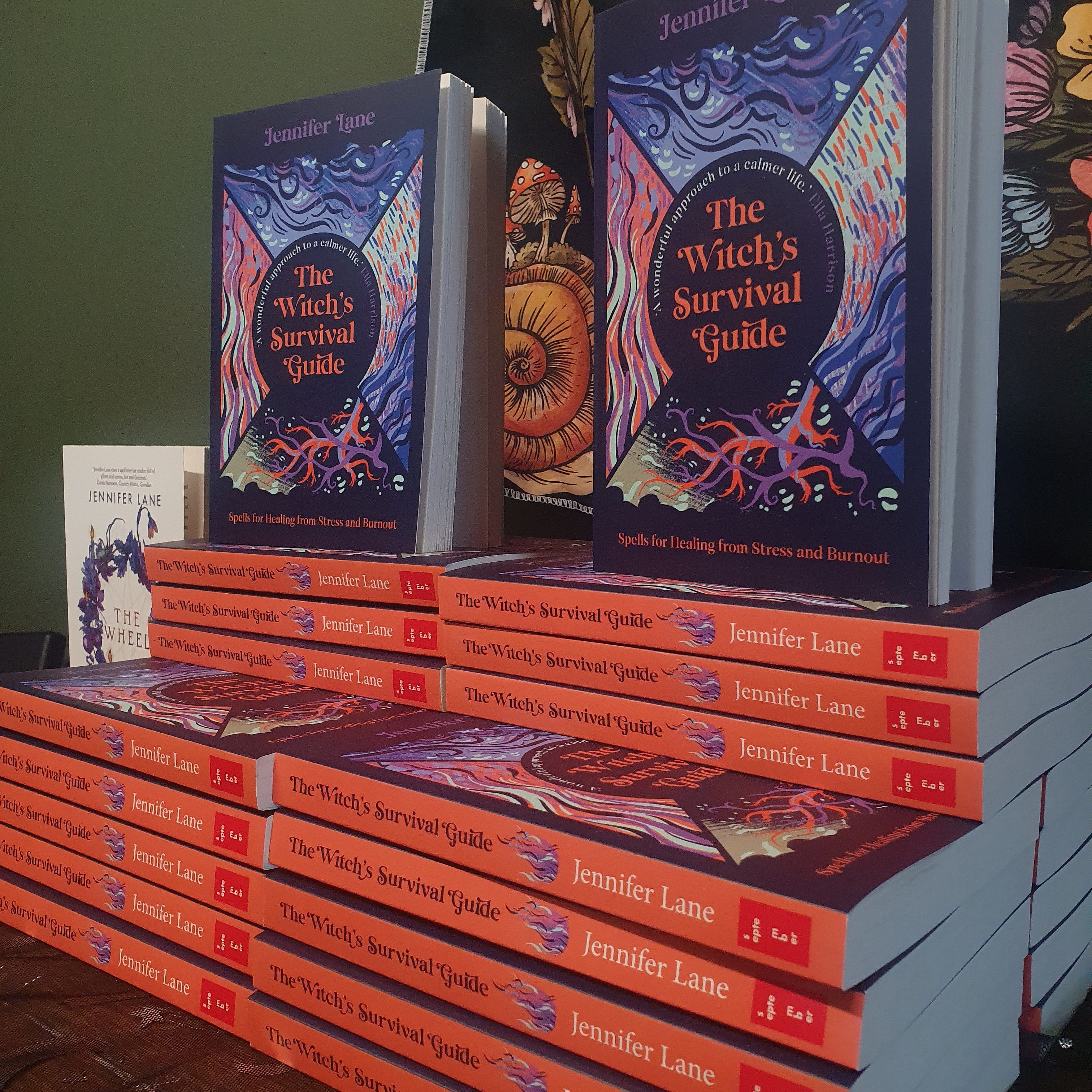
At the end of my book, The Witch’s Survival Guide, I have included a glossary of witchcraft terms, as well as several tables of magickal correspondences, because I remember how overwhelming the language of the craft and the many layers of symbolism felt when I first began. Witchcraft is filled with hidden meanings and terms that need to be learned by rote (witch hack: make your own flashcards) and through immersive practice in your craft over time, so never feel embarrassed if there is a word you don’t recognise yet. We’re all learning continuously within the craft, no matter how long we’ve walked this path!
I hope this glossary has helped demystify some of the language surrounding witchcraft and Paganism for you.
If there are any other witchcraft terms you’d like me to explain in a future part two, let me know in the comments below!
Also, some exciting news from me:
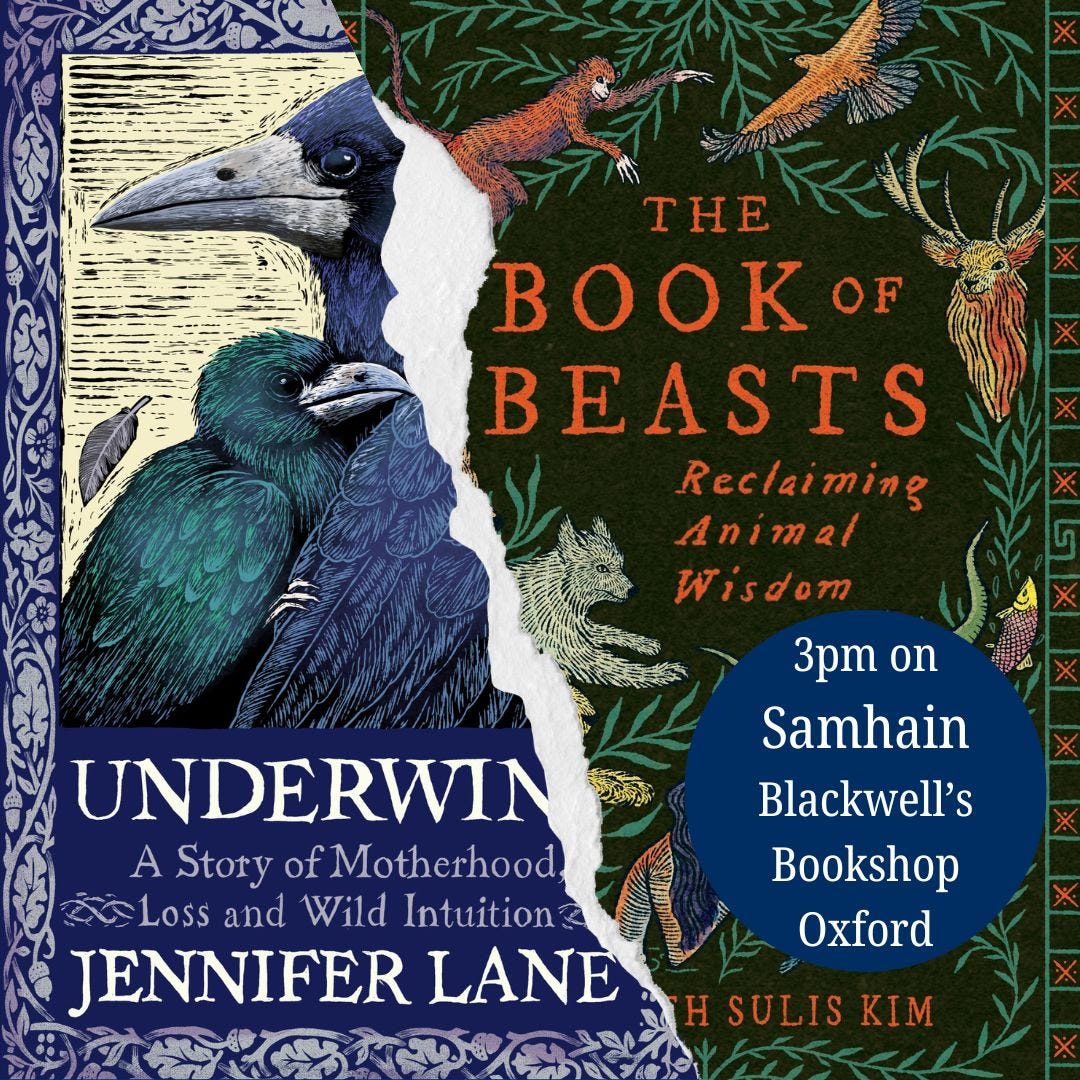
I’ll be in conversation with the fantastic Elizabeth Sulis Kim – author of The Book of Beasts and editor of Cunning Folk Magazine – at Blackwell’s Oxford at 3:00 PM on Samhain (31st October). We’ll be talking motherhood, wild intuition and animal folklore on the Witch’s New Year. Get your FREE ticket here >
We can’t wait to see you there!
Thank you so much for reading, and I’ll see you next week as we begin preparing for the summer solstice and the longest day of the year – the Pagan sabbat of Litha.
Jennifer x
Originally published on Substack