

Hello, my lovely.
I have an extra-special edition of The Green Witch for you today. I hope you’re ready with a good cup of tea 💚
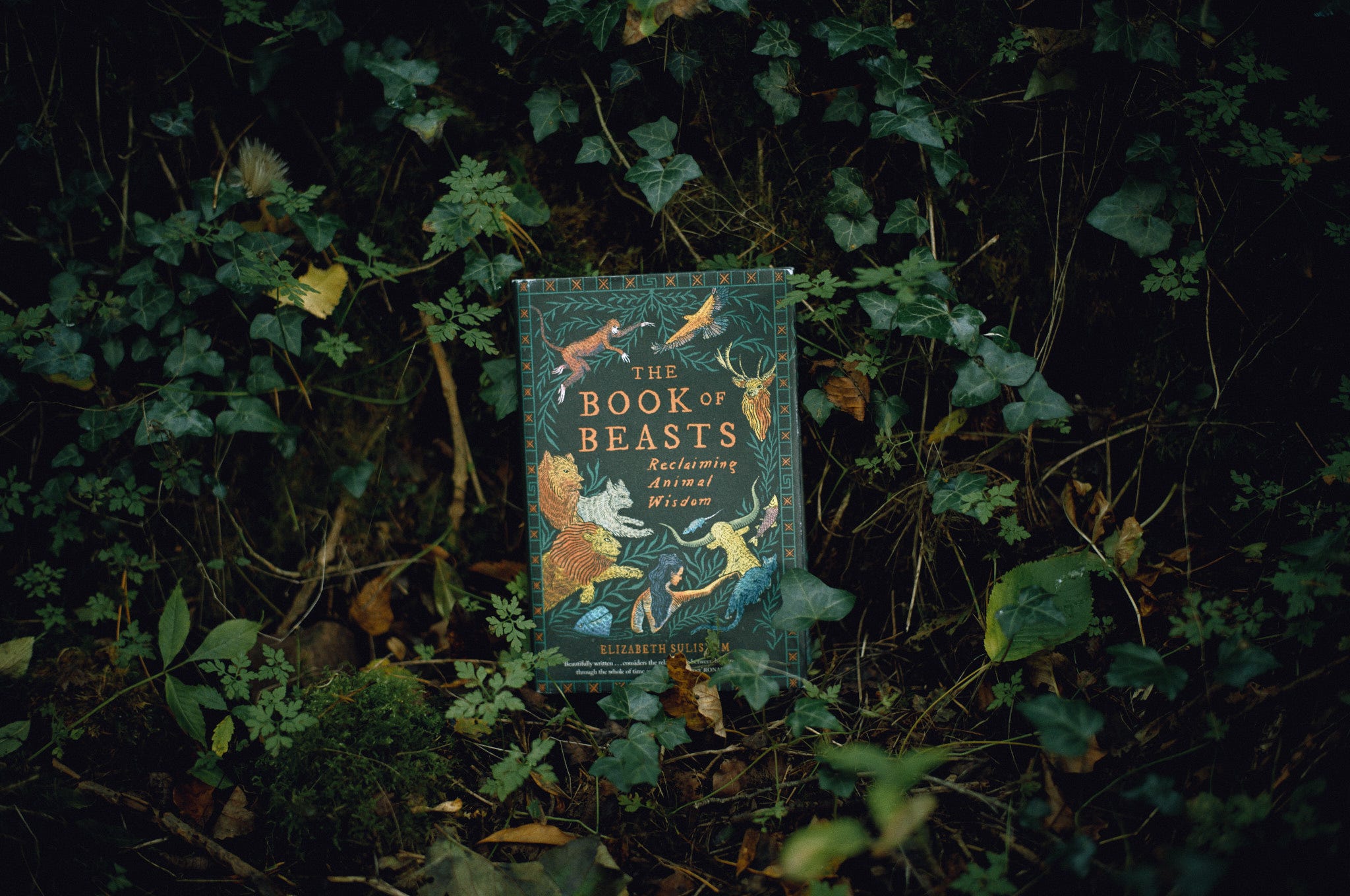
Introducing The Book of Beasts: Reclaiming Animal Wisdom by Elizabeth Sulis Kim (AKA your next favourite Samhain read)!
The eagle-eyed amongst you will know I was supposed to be giving a talk with Elizabeth at Blackwell’s Oxford tomorrow. My book, Underwing, contains themes of animal magick and symbolism, which overlap with Elizabeth’s debut book. However, as you have probably seen… life took an interesting turn! Hopefully we will be together soon for another event, but in the meantime, delve into this exclusive interview with the incredible author, and editor of Cunning Folk Magazine, Elizabeth Sulis Kim, here on The Green Witch.
In our interview, we discuss folklore, old gods, the magick of animals, and her brand new book. The Book of Beasts is an invitation to re-enchant our living world and reclaim kinship with animal kind.
I hope you love the book as much as I do!
Hi Elizabeth! You’ve been the editor of Cunning Folk Magazine for 7 years now. What first enchanted you about folklore, magic and myth?
I grew up in the rural West Country, which a lot of people see as a centre of folklore. Really, folklore is everywhere, but I suppose there is a lot in this region to validate our preconceived notion of what folklore looks like, from the storied castles, sacred wells and Iron Age forts to a rich folk music scene, local festivals and wassailing. When I was growing up, the region was a conservative stronghold and I felt a lot of ‘traditions’ were linked to that – many felt to me a bit dry and dusty and like people trying to cling so hard to a custom invented 50, maybe 100 years ago, that it was already dead.
On the other hand, this region also drew lots of dreamers looking for a better life out west. My first memories were of growing up in a vegetarian retreat centre set in a bamboo garden straddling the River Lim, frequented by witches and people from alternative spiritual communities. It was a peaceful place, an Eden in some ways, but – even as a young child – I sometimes felt I was looking at the seams of reality: I could see how old and new ideas were constantly intermingling and new stories being told – dogmatic thinking made no sense to me.
Certain things did enchant me, though: the West Country is a beautiful region at the end of the land to the far west, with dark nights and star-strewn skies, and I lived at the edge of one of the wildest places in the countryside – the Undercliff – an area between the cliffs subject to landslips and thus neglected by humans and densely forested. You can feel in places how the land has become storied. I love that people still care about where King Arthur was born, died, or buried. I grew up visiting lots of sites connected with Arthurian myth, and with folk tales such as the mermaid of Zennor. I love that so many of these places have inspired artists and writers – you can feel the animistic pulse in the works of writers from this region such as Thomas Hardy and Daphne du Maurier. And I loved our regular trips to Glastonbury, its Tor and witchy shops – it’s a town where myth, ancient history and contemporary esoteric culture collide.

Nevertheless, in my teens, I drifted away from a lot of the magic I’d experienced growing up. I became quite scientifically minded. But later I realised it is quite scientifically limiting to not pay attention to the unseen. A healthy dose of scepticism is helpful, but we’d be wary of dismissing everything as nonsense. Folklore and myth validate our feelings that it’s strange and wonderful and frightening to be alive, and we still don’t have all the answers. People are becoming more aware that folklore isn’t an ancient survival, and are open to the idea of inventing new traditions, or revitalising tired ones, to connect communities and give our lives meaning, and that is wonderful.
2. What made you settle on the 12 animals you write about in The Book of Beasts?
Initially this was going to be a cultural history about how we’ve turned away from other animals and our animal natures, but as I worked on my book proposal, it became clear I’d have to think more closely about the animals themselves. As I write in the book, our relationships with animals have ebbed and flowed across time and place, but it does feel like there’s been a downhill trajectory overall in how we treat them, reflected in the stories we tell about them.
To structure the book, I was looking for twelve animals emblematic of different aspects of our relationships with animals to tell a greater story about how dominant Western cultures have fallen in and out of love with animals and with our animal selves. Which animals appeared frequently as pests, monsters, messengers, gods, idols, collaborators, and commodities? I could have featured many other animals, but in looking at the specific, I hope readers will feel called to re-examine the holistic picture.

3. Why do you think we have such a deep-seated need to tell stories about animals – and has this need changed over time?
We are animals and we once shared our spaces with other animals better than we do now and understood ourselves in relation to them. Whether we like it or not, we are related to all the other creatures on the planet. Looking at other animals gives us keys to understanding who we are in this complex, ever-expanding family tree.
I think animals remind us of mystery, of how much of the world and our own bodies we haven’t mapped or understood. They at least appear to us deeply attuned to instincts and have skills many of us have lost touch with – and may well have complex inner worlds and knowledge that rival our own. Many stories about other animals seem to hint at a long-term concern of ours: what do these animals know that we don’t? Why are they migrating south or pricking their ears up when it looks like nothing in the room has changed or choosing to swim against the river current to spawn their young in their natal headwaters? For all our technology, we humans are still unable to communicate with other animals and ask them these things. If we could speak with them, we’d have to reckon with how we treat them.

Our need to tell animal stories in much of the world has changed: in prehistory, humans centred other animals in their material culture, and it is tempting to speculate they also centred them in their stories. In the ancient world, many gods, idols and guardians were represented as therianthropes (creatures part human, part beast), or in stories transformed into other animals – think Apollo turning into a dolphin and leading people to Delphi to found the sanctuary and Fintan mac Bóchra transforming into a salmon. In many cosmologies there are still animal gods or gods with other animals’ features, including among many Indigenous communities in North America and in Hinduism, one of the world’s oldest surviving religions – which has had a profound influence on modern paganism via Theosophy and other 19th-century esoteric orders who drew inspiration from Eastern cultures.
In the last couple of centuries, animals have dwindled in adult fiction, even if they’ve remained a mainstay in children’s fiction, which is interesting, as it feels, as with fairytales, that our meaningful connections to the natural world have been infantilised as bedtime stories. Biodiversity loss in this same period has been significant. We may not be telling so many stories about animals, but many brands and political groups harness their emotional power. They remain powerful heralds and symbols even for people detached from relationships with the real animals, so we’d be wise to reflect on what animals mean to us and collectively reclaim these relationships.
4. In The Book of Beasts, you travel across cultures and thousands of years of human history. What surprised you most during your research?
One catalyst for me writing the book was realising the extent to which animals seemed to matter in prehistoric Europe, even in the ancient world, and how common stories about human-other-animal kinship seem in Europe’s past. Modern pagans often imagine animals as the sidekicks of gods – from Odin’s ravens to Artemis’ deer and bears – but it does appear that in certain parts of shared histories, the animals themselves were centre stage.
The cultural significance of megafauna such as bears, wolves, deer and lions in Europe really becomes apparent when you dig into place names and heraldry and the identity of towns – but also of smaller, more inconspicuous animals most of us hardly think about today, such as fish, which people in this region once seemed to hold sacred. I was reassured by the number of spells, the world over, to dispel ‘vermin’ where rats are asked to leave rather than immediately exterminated – there’s a sense of mutual responsibility. Often these spells would entail leaving an offering for the rats or mice – a recognition that they need to eat too. We’ve really disenchanted the animal kingdom, but there’s still potential to see the extraordinary in the ordinary, the magic in the mundane, if we tell different stories about the myriad other lives among us.
Another thing that surprised me was the extent of dietary prohibitions in the ancient world. We think of vegetarianism or veganism as modern, but actually our current consumption of animal products is unprecedented in history. In parts of Scotland where people knew of the Salmon of Knowledge, archaeological evidence indicates it was taboo to eat fish; in England it was at one time taboo to eat chickens and hare, both sacred animals; the people who worshipped Hathor in Ancient Egypt didn’t eat cows, and those who worshipped a goat-human composite in the city of Mendes didn’t eat goat. It makes sense: many religions and cultures have sacred lines that can’t be crossed, though it does feel in the dominant cultures like we have fewer lines. Where once we paid heed to our complex feelings about consuming animals by regulating our consumerism through myth, and through complicated sacrificial rituals, now we avoid these feelings through silence and distance from the animals we exploit.

5. Your book asks us to reconsider how we live alongside the creatures with whom we share this planet. Do you have any words of hope or advice for readers who may wish to live more closely alongside the other-than-human world?
Pay attention: other animals are all around us, from the robins flittering outside our window to the pigeons on our streets, from urban foxes to the snakes slithering through grasslands to the larger mammals stalking the woods. You might see them more as the trees thin out and everyone needs to fatten up for the cold months. In places with bears, now is a time when they come out of the forests and can be seen fishing for salmon in rivers. Where I am now, the squirrels and little birds are out in great number searching the leaf litter for food. It’s very easy to see these things as mundane, as we do most of reality, but we needn’t.
Reading about folk stories, beliefs and myths about animals – many of which I have shared in my book – might help us look at the world anew, awakening our misplaced sense of wonder. Our stories also expose how much we project onto animals – divinity, demonism, insentience – but these labels tell us more about ourselves than the animals. Reflect on whether the things we think about animals are actually empirically measurable or perceptions borne from cultural stories.
Next time you see your neighbourhood cat or a crow or a cow in a field, try looking into their eyes and imagining what it is to be them. How do they live? Who are they, really? We might connect with compassion, but also mystery. Our science and our folklore show we have spent a long time observing other animals, but still we don’t know them as well as we could. In many cultures, animals also come forth as messengers in dreams – are these, too, projections of the human mind – or are the animals trying to tell us something? The jury is out. Animals as messengers or guides is, however, culturally important – and might be a more constructive story than animals as insentient commodities. We can never know what it is to be another person, or another animal, but the best authors of fiction get pretty close at letting you into someone’s head, and this is a veritable kind of magic we can all aspire to – it feels like they begin with intuition and end with quasi-omniscience.
And practically speaking, according to many cosmologies, we’re at a good time of year [Samhain] for crossing boundaries. Across cultures with four seasons, winter – and the transition into it – is considered an opportune time for connecting with the other side. Our feelings might manifest in our environment, with our repressed conscience and our grief appearing in ghostly apparitions such as the Wild Hunt or strange creatures that crawl out of rivers and threaten to drag us back with them. It’s a time for communicating with the dead but also the living; for breaking down boundaries between us and them, life and death, human and animal, for acknowledging mystery.
*
About Elizabeth Sulis Kim
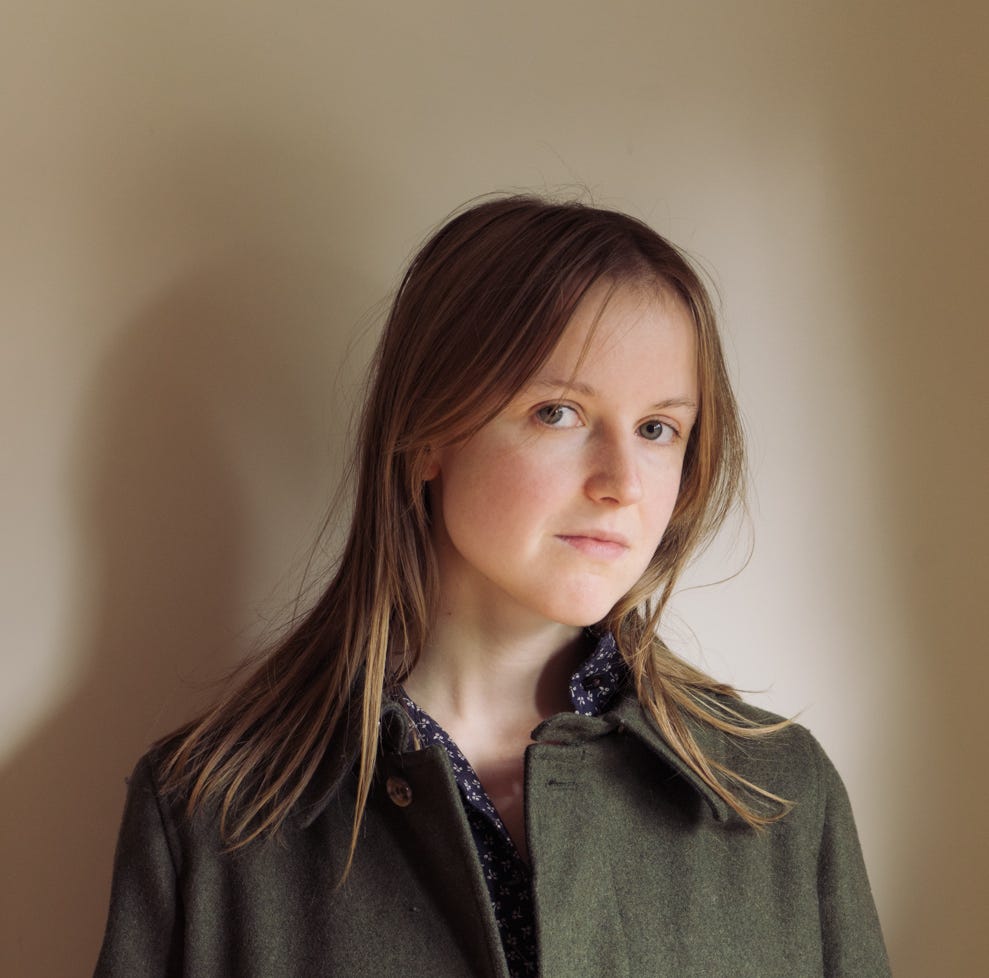
Elizabeth Sulis Kim‘s writing has appeared in places such as BBC Culture, Mslexia, Hellebore, Fiddler’s Green, Litro, The Guardian, The Independent, Refinery29, and the LA Review of Books. She is the founding editor of Cunning Folk, the popular independent magazine about magic, mythology, folklore and the occult. She grew up in the rural West Country and now lives in Scotland.
About The Book of Beasts
A modern bestiary with an ancient heart: meet twelve emblematic animals and restore your relationship with the natural world.
The bear deities, Artio and Artaius, who’ll rise from sleep; the salmon of wisdom who gifts understanding of the universe’s past, present and future; the Lion Man carved 40,000 years ago. Join Elizabeth Sulis Kim as she travels across the globe and through time, from our deep past into the future, bringing together the animals which have captivated us for millennia.
You can buy The Book of Beasts from all good bookshops and catch Elizabeth Sulis Kim on her book tour.
She is next speaking at Blackwell’s Oxford (31st October – at 3 pm), Hinterland Festival at The Portico Library in Manchester on the 7th November, 9th November at Collected Books, Durham, 11th November at The Last Tuesday Society (online).
I hope you’ve enjoyed this exclusive interview – I plan to bring more of these to you very soon on The Green Witch!
In the meantime, my much-awaited Samhain newsletter is out now. Have a glorious festival, all who celebrate.
Bright blessings to you for dark nights,
Jennifer x
Originally published on Substack
